
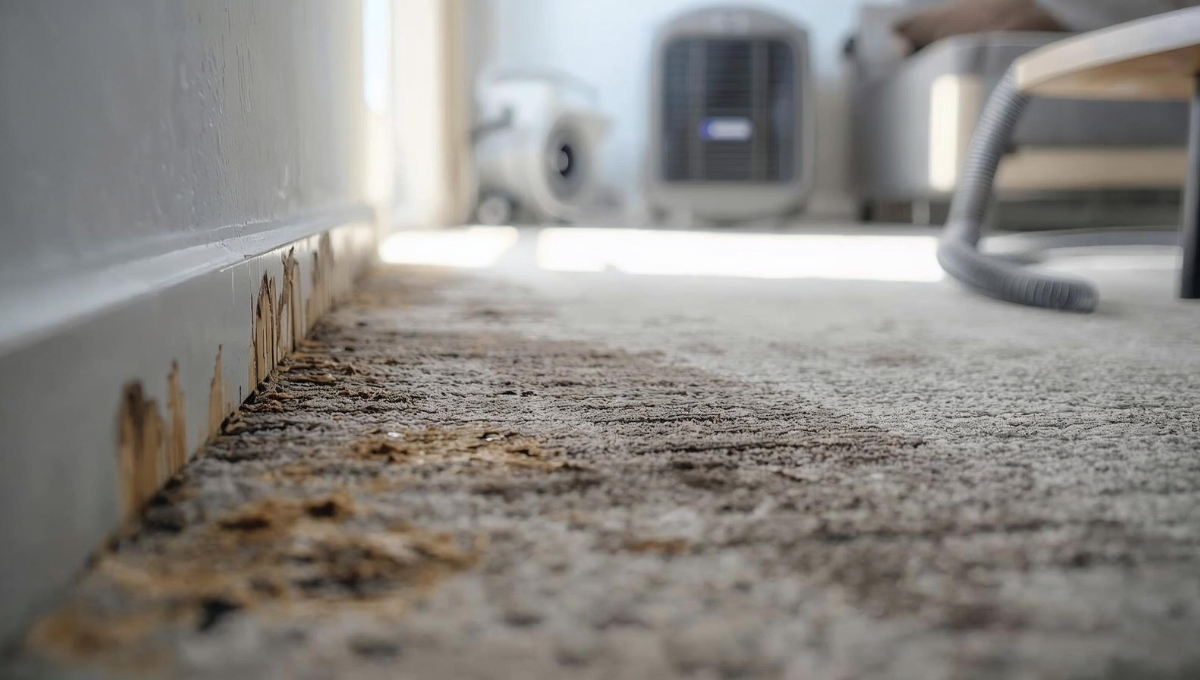
Mold in carpet from water damage can quickly become a serious problem for homeowners in Greater Los Angeles. When moisture seeps into your flooring, it doesn’t just damage the carpet, it threatens your air quality, your health, and even your home’s structural integrity. At Coast View Plumbing & Restoration, our team specializes in identifying, cleaning, and restoring water-damaged areas before mold spreads beyond control.
If you notice musty odors or damp carpet after a leak or flood, don’t wait. Call our experts today through Google and schedule a free on-site inspection.
Understanding How Water Damage Leads to Mold in Carpet
Carpeted flooring is one of the first places mold takes hold after water exposure. When leaks, floods, or burst pipes soak the carpet fibers and padding, moisture becomes trapped beneath the surface. With Los Angeles’ moderate climate and occasional humidity, those damp layers create ideal conditions for mold spores to grow within just 24 to 48 hours.
Even a small spill that isn’t completely dried can lead to microbial growth. Once the spores establish themselves, they spread rapidly, feeding on organic materials in carpet backing and dust. This is why professional restoration is critical, standard vacuuming or surface cleaning often misses the moisture hidden deep in the padding.
Common causes of water damage that lead to carpet mold include:
- Plumbing leaks under floors or behind walls
- Overflowing sinks, tubs, or toilets
- Broken washing machine or dishwasher hoses
- Roof or window leaks during storms
- Flooding from heavy rain or burst pipes
It’s important to understand that water damage isn’t just an inconvenience, it’s the trigger for a potential health hazard. Left untreated, a minor leak can evolve into a major mold problem that affects the entire room or HVAC system.
Health Risks and Signs of Mold in Carpet
Mold-contaminated carpets can pose serious health risks for people and pets. When spores become airborne, they spread through your home’s ventilation system and are easily inhaled. Individuals with asthma, allergies, or weakened immune systems are especially sensitive to mold exposure.
Common symptoms of mold exposure include:
- Sneezing, coughing, or sore throat
- Eye irritation or redness
- Skin rashes or itching
- Nasal congestion and headaches
- Worsened asthma or allergy symptoms
Beyond the health concerns, mold can damage the carpet fibers and subfloor, causing permanent staining, warping, and unpleasant odors. Mold in carpet typically smells musty or earthy, similar to damp wood or wet socks.
You may also notice:
- Dark green, black, or white patches on carpet
- Persistent dampness even after cleaning
- Peeling paint or bubbling near floorboards
- Increased allergy symptoms when inside the room
When these signs appear, don’t try to mask the odor or spray over it. Mold spreads invisibly beneath the surface, often extending to the padding and subfloor. The safest solution is professional mold inspection and remediation.
How to Remove Mold from Carpet Safely
The best way to remove mold from carpet depends on the severity of the contamination. Light surface mold may sometimes be cleaned, but once it penetrates the carpet padding or subfloor, replacement is usually necessary. The key is acting quickly before the mold colony expands.
At Coast View Plumbing & Restoration, our certified technicians use professional-grade equipment and antimicrobial solutions to clean and restore carpets safely. Here’s the process we follow to eliminate mold from water-damaged areas:
- Inspection and Moisture Detection
Using infrared cameras and moisture meters, we locate hidden water pockets under the carpet and within the padding. - Containment and Safety Measures
We isolate the affected area to prevent mold spores from spreading to clean spaces. Our team wears protective gear and uses HEPA air filtration for safety. - Water Extraction and Drying
High-powered vacuums and industrial dehumidifiers remove excess moisture quickly to stop active mold growth. - Cleaning and Disinfection
Antimicrobial cleaning agents break down mold spores and bacteria while protecting the carpet fibers. - Carpet and Padding Replacement (If Needed)
If the mold has penetrated the base layers, we safely remove and dispose of contaminated materials and replace them with clean, mold-resistant materials. - Final Air Quality Testing
We verify that spore levels are safe before completing the project, ensuring your indoor air is healthy again.
While DIY cleaning with vinegar or baking soda can help minor cases, it’s not recommended for larger areas. Household cleaners often fail to reach deep moisture layers where mold thrives. Professional restoration is safer, faster, and usually less expensive than long-term repairs caused by spreading contamination.
Preventing Mold After Water Damage
Prevention is the most effective way to protect your home from mold. The faster you act after water exposure, the lower your risk of mold growth.
Here’s how to prevent mold after water damage:
- Remove standing water immediately. Use a wet vacuum or call for emergency extraction services.
- Dry the carpet within 24 hours. Use fans, dehumidifiers, and open windows for airflow.
- Lift the carpet edges. This allows moisture trapped underneath to escape.
- Disinfect the area. Use antimicrobial sprays designed for carpets and fabrics.
- Control humidity. Keep indoor humidity below 50%, especially during warm months.
- Fix leaks fast. Repair plumbing or roof leaks as soon as they’re detected.
For homes that experience repeated leaks or flooding, consider installing waterproof padding or switching to nonporous flooring in high-risk areas. Regular inspections—especially after storms or plumbing issues, can prevent mold from taking hold before it becomes visible.
If your home in Lake Los Angeles, Pomona, Rancho Cucamonga, or anywhere in the Greater Los Angeles area has experienced water damage, it’s important to act quickly. Contact Coast View Plumbing & Restoration today for professional water and mold remediation. We’ll inspect your property, remove mold safely, and restore your space so you can breathe easy again.
Why Choose Coast View Plumbing & Restoration
Choosing the right restoration company can make the difference between a quick recovery and long-term damage. Coast View Plumbing & Restoration brings years of experience and advanced technology to every project, serving both residential and commercial clients across Greater Los Angeles, including Victorville, Fontana, Claremont, and San Bernardino.
Here’s what sets our team apart:
- Certified Mold Remediation Experts: We follow industry standards for safe, effective mold removal.
- Full-Service Restoration: From plumbing repairs to carpet replacement, we handle every step.
- Rapid Response: Our emergency team is ready for same-day service when you need it most.
- Local Experience: We understand the regional climate and water damage challenges unique to Southern California.
- Customer Satisfaction: Our clients trust us for transparent communication, honest assessments, and high-quality results.
Whether your damage came from a burst pipe, flood, or hidden leak, our team provides end-to-end solutions to protect your property. We handle everything from plumbing repairs to final carpet restoration, so you don’t need to coordinate multiple contractors.
FAQ – Mold in Carpet from Water Damage
- How long before mold grows in wet carpet?
Mold can start forming within 24 to 48 hours after the carpet becomes wet if it isn’t dried quickly and completely. - Can moldy carpet be saved or does it need replacing?
If the contamination is small and hasn’t reached the padding, professional cleaning can save it. But once mold penetrates deeper layers, replacement is usually the safer option. - What does mold in carpet smell like?
A musty, earthy smell is one of the first indicators. The odor often intensifies when humidity rises or when you walk on the carpet. - Can I clean moldy carpet myself?
Minor surface mold may be cleaned using antimicrobial carpet cleaners, but extensive mold requires professional remediation to ensure complete removal and prevent regrowth. - Will a dehumidifier help prevent mold growth in carpets?
Yes. Dehumidifiers lower indoor moisture levels, reducing the chance of mold growth after water exposure. They’re especially useful in basements, bathrooms, and laundry rooms.
Take Control of Water Damage Before It Becomes Mold
Mold doesn’t just affect your carpet, it affects your health, comfort, and peace of mind. If you’ve experienced any kind of water damage, don’t wait for visible signs of mold to appear. The longer you delay, the more expensive and invasive the cleanup becomes.
Schedule your professional inspection today with Coast View Plumbing & Restoration. Our experts will respond quickly, identify moisture sources, and restore your home safely and efficiently.